Brewing Guides
How to Make Turkish Coffee
Make Turkish coffee in a cezve with very finely ground coffee, cold water and slow heat. Quantities, sugar levels, the foam, and how to serve it.
At a glance
- Coffee
- 6–7 g (1 heaped teaspoon) per cup
- Water
- 60–70 ml (about 2 fl oz) cold water per cup
- Ratio
- About 1:10
- Water temperature
- Start with cold water; heat slowly and never let it boil hard
- Grind
- Extra fine, like flour (finer than espresso)
- Brew time
- About 3–4 minutes over low heat
You'll need
- Cezve (also called ibrik)
- Small cups (demitasse)
- Teaspoon
- Stove
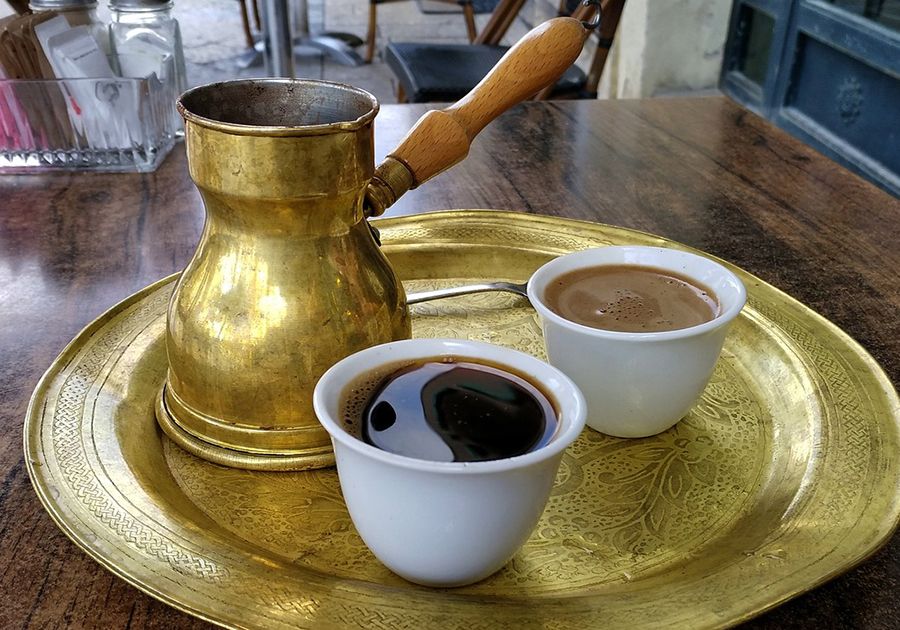
Turkish coffee is made by slowly heating very finely ground coffee, cold water and sugar (if you like it sweet) together in a small pot called a cezve or ibrik. Nothing is filtered: the coffee is poured straight into small cups, foam first, and the grounds settle at the bottom.
It takes about five minutes and needs no special machine. The two things that matter most are the grind, which should be as fine as flour, and patience with the heat.
What you need
- Turkish coffee: ground extra fine, finer than espresso, so it feels like powder. Buy it ready-ground as “Turkish coffee” or ask a roaster to grind it on the finest setting.
- A cezve (ibrik): a small pot with a long handle, narrower at the top so the foam rises. A small saucepan works in a pinch, but makes less foam.
- Small cups: Turkish coffee cups (demitasse) hold about a quarter of a cup, roughly 60–70 ml.
- Cold water, and sugar if you take it.
How much coffee and water
Use about one heaped teaspoon (6–7 g) of coffee per cup, with one cup of cold water (60–70 ml). Kurukahveci Mehmet Efendi, an Istanbul roaster that has made Turkish coffee since the 19th century, gives one teaspoon (6 g) per cup and measures the water with the coffee cup itself, which is the simplest way to get it right.
For two cups, double everything, and use a cezve big enough to leave room for the foam to rise.
How sweet?
Sugar goes in at the start, because the coffee is never stirred once it is foaming. When ordering in Türkiye you choose one of four levels:
| Name | Meaning | Sugar per cup |
|---|---|---|
| Sade | Plain | None |
| Az şekerli | A little sugar | About ½ teaspoon |
| Orta şekerli | Medium | About 1 teaspoon |
| Çok şekerli | Sweet | About 1½ teaspoons |
Sugar amounts follow the Turkish Ministry of Culture and Tourism’s guide.
Step by step
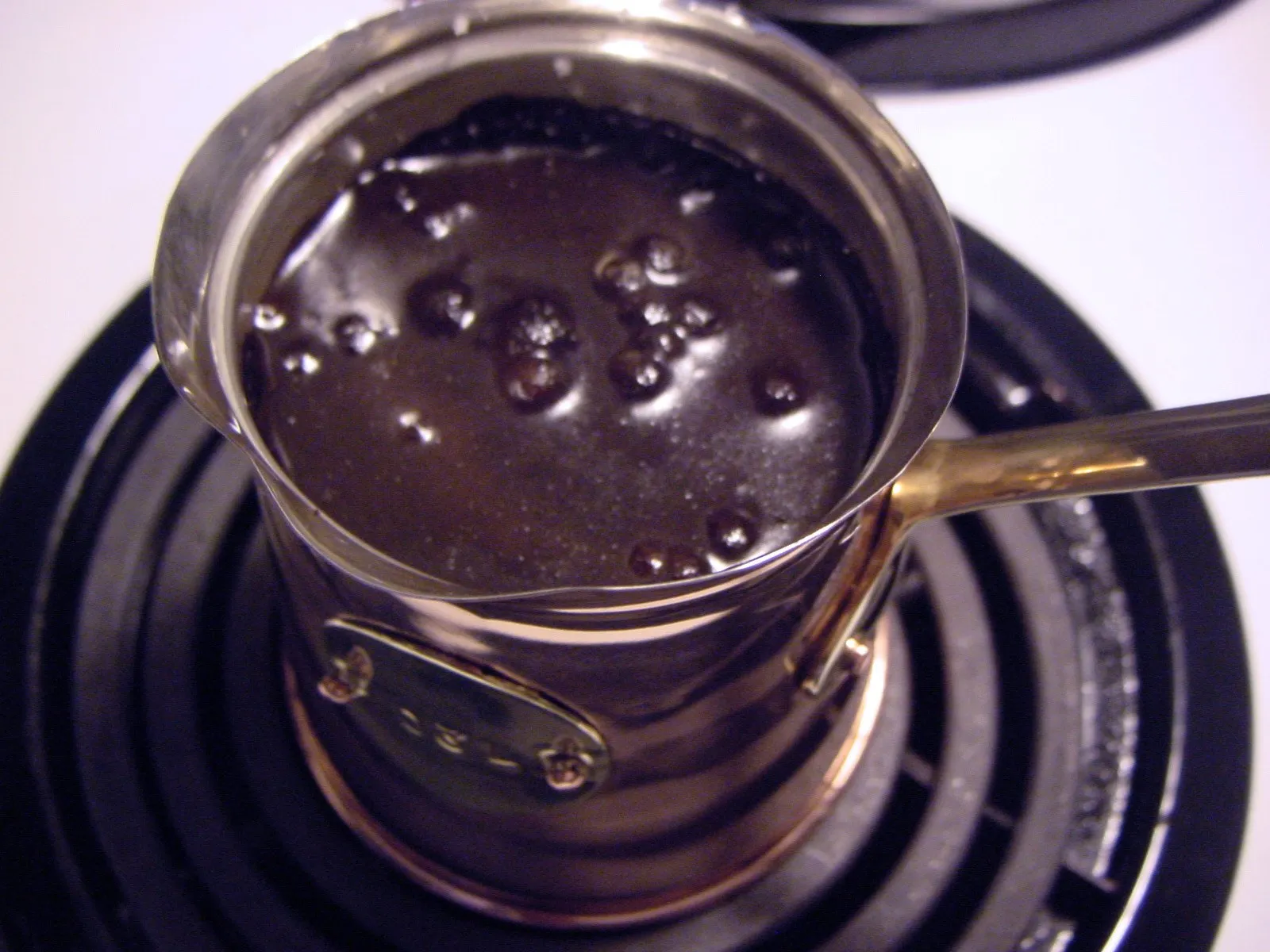
Photo: Nate Steiner, CC BY 2.0, via Wikimedia Commons
- Measure. Pour one cup of cold water per person into the cezve. Add one heaped teaspoon of coffee per cup, and sugar if you want it.
- Stir once, before heating. Stir until the coffee is wet and the sugar dissolves. This is the only time you stir.
- Heat slowly. Put the cezve on low to medium-low heat. Don’t walk away: the whole brew takes only three or four minutes.
- Watch for the foam. A ring of fine bubbles forms at the edges, then a layer of foam builds across the surface and starts to rise.
- Share out the foam. Just before it boils, take the cezve off the heat and spoon a little foam into each cup.
- Let it rise once more. Return the cezve to the heat until the coffee rises again, then pour it slowly into the cups, letting it slide down the side so the foam stays on top.
- Wait a minute. Let the grounds settle before drinking.
Serving Turkish coffee
Turkish coffee is traditionally served with a glass of water, drunk first to refresh the palate. It is often offered with something sweet, such as lokum (Turkish delight) or chocolate. Sip it slowly and stop before the thick layer of grounds at the bottom.
The way Turkish coffee is prepared, served and shared was added to UNESCO’s list of the Intangible Cultural Heritage of Humanity in 2013.
Turkish coffee questions
Can I use a regular coffee grinder? Many home grinders cannot grind fine enough. A hand grinder made for Turkish coffee, or ready-ground Turkish coffee, gives the right texture.
Can I make it without a cezve? Yes, in the smallest saucepan you have. Use the same low heat and watch closely; the foam will be thinner.
Is Turkish coffee stronger than other coffee? It uses about one part coffee to ten parts water, a lot more coffee for the amount of water than drip coffee (around one to sixteen), so it tastes strong and full-bodied in a small cup. To compare ratios, try our coffee ratio calculator.
For other ways to make coffee without a machine, see our guides to cowboy coffee and ten methods for making good coffee at home.
Troubleshooting
- No foam
- Start with cold water, use lower heat, and grind finer; freshly ground coffee foams best.
- Bitter or burnt taste
- Take the cezve off the heat as soon as the foam rises, before it boils.
- Gritty cup
- Let the cup rest for a minute before drinking, and stop sipping before the grounds at the bottom.
Common mistakes
- Using hot water or high heat, which leaves little or no foam.
- Letting the coffee boil hard, which breaks up the foam and makes it bitter.
- Stirring after the foam has formed.
- Using coffee ground for espresso or filter; it is too coarse and floats on top.
Scaling this recipe? Use the coffee ratio calculator.